How to Pack Light for Paris (Without Looking Like a Tourist)
One carry-on, seven days, and a wardrobe that blends in on the Left Bank — the exact method, palette, and packing order we use for Paris.
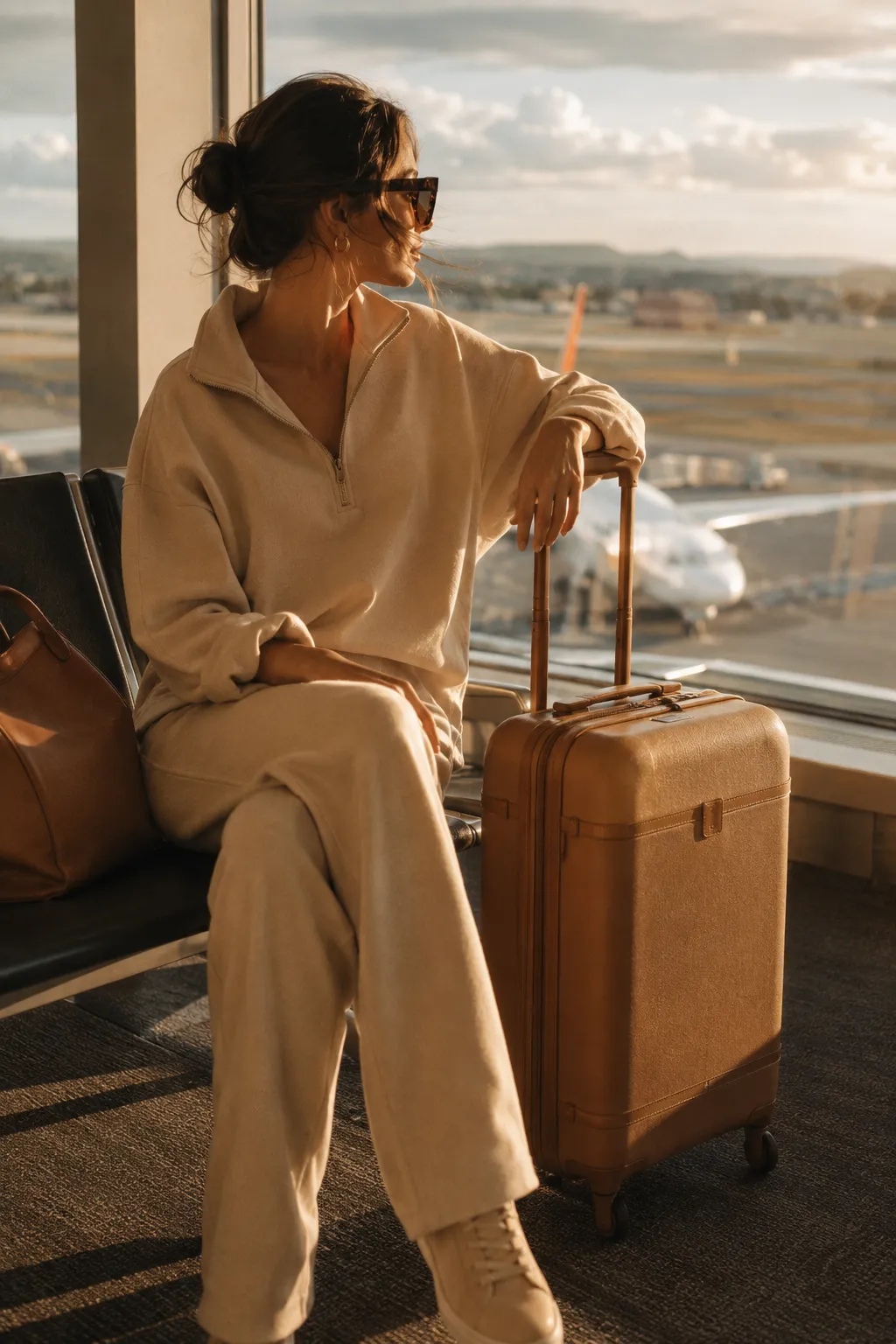
Jump to a section
- First, the mindset shift that makes everything else work
- The 10-piece Paris capsule
- Shoes: the part everyone gets wrong
- The bag you carry there — and the bag you carry around
- Toiletries without the liquids drama
- The packing method, step by step
- Pack for the season, not the forecast
- How to actually look Parisian (not just “neat”)
- Mistakes that wreck a light Paris packing list
- A sample 7-day mix (one carry-on)
- Key takeaways
- Frequently asked questions
One carry-on. Seven days. A wardrobe that looks like it belongs on the Left Bank — not like it just rolled off a tour bus. This is the full method: what to bring, what to leave, how to fold it, and how to actually look Parisian once you’re there.
Most “pack light” advice stops at bring fewer things. That’s not a plan — that’s a guilt trip. The real problem with packing for Paris isn’t quantity. It’s that Paris asks a lot of one suitcase: cobblestones that destroy the wrong shoes, weather that turns three times a day, cafés and museums and a dinner reservation that all have opinions about what you’re wearing, and a city full of people who dress with quiet, infuriating ease.
So this guide solves the whole thing, in order. By the end you’ll have a single carry-on that covers a week, reads as effortless, and never once makes you the most obviously-American person in the room.
First, the mindset shift that makes everything else work
Light packing fails when you pack for outfits. You picture Monday’s look, Tuesday’s look, and suddenly you’ve got seven tops that only work one way each.
Parisians don’t dress in outfits. They dress in a small set of pieces that all talk to each other. One palette, one level of formality, everything mix-and-match. That’s the entire secret, and it’s also why their carry-ons are tiny.
Your one rule for the whole trip:
If a piece doesn’t go with at least three other things you’re bringing, it doesn’t come.
Apply that ruthlessly and your bag packs itself.
The 10-piece Paris capsule
Here’s the core. Ten pieces — clothing only, shoes and extras come after — that generate well over a dozen outfits across a week.
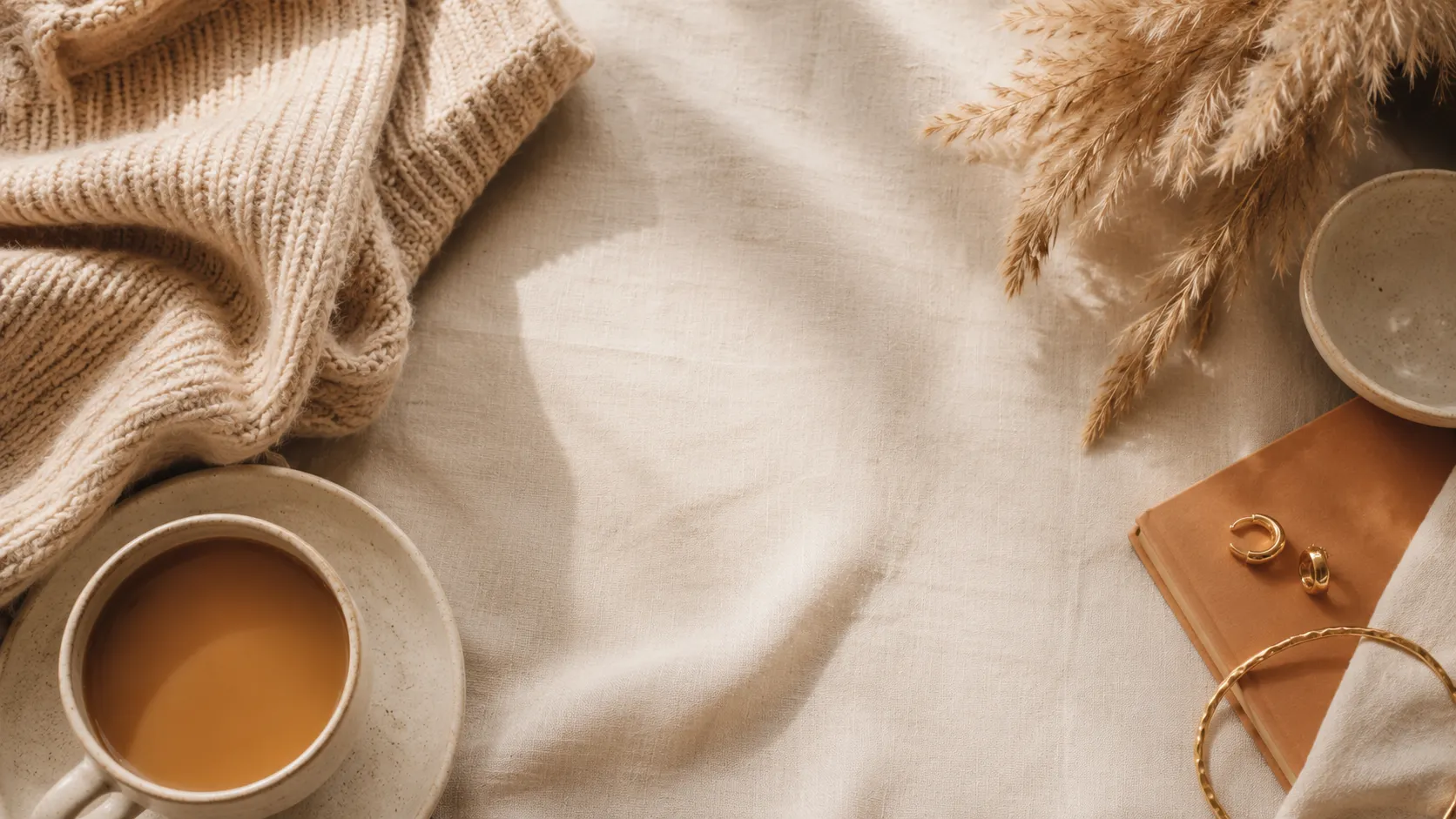 Ten pieces, one palette — every item earns its place by pairing with at least three others.
- 1 pair of dark, well-cut trousers — straight or tapered, in black, navy, or charcoal. Dresses up, dresses down, hides everything.
- 1 pair of jeans — a clean mid or dark wash, no rips. Paris does denim, but it does it tidy.
- 2 tops you actually love — a crisp white shirt and a fine-knit in a neutral. These are your workhorses.
- 2 simple tees or a tee + a striped top — the Breton stripe is a cliché because it works. One is plenty.
- 1 knit or light sweater — a layer for evenings and over-air-conditioned museums.
- 1 dress — a slip or simple midi that goes flat-shoe-casual by day and heel-dinner by night.
- 1 blazer — the single piece that makes everything else look deliberate.
- 1 trench or transitional coat — see the weather section; this is non-negotiable most of the year.
Notice what’s not here: nothing loud, nothing single-purpose, no “just in case” pieces. Every item is a neutral that layers with every other item.
Build the palette first, the pieces second
The reason a small wardrobe still looks rich is tonal dressing — a tight band of colours that always combine.
Pick two neutrals and one accent. For example: cream + black, with a camel or burgundy accent. Or navy + grey with a soft white. Every piece you pack must live inside those three colours. Do this and anything you grab in the morning matches — which is the real luxury of light packing.
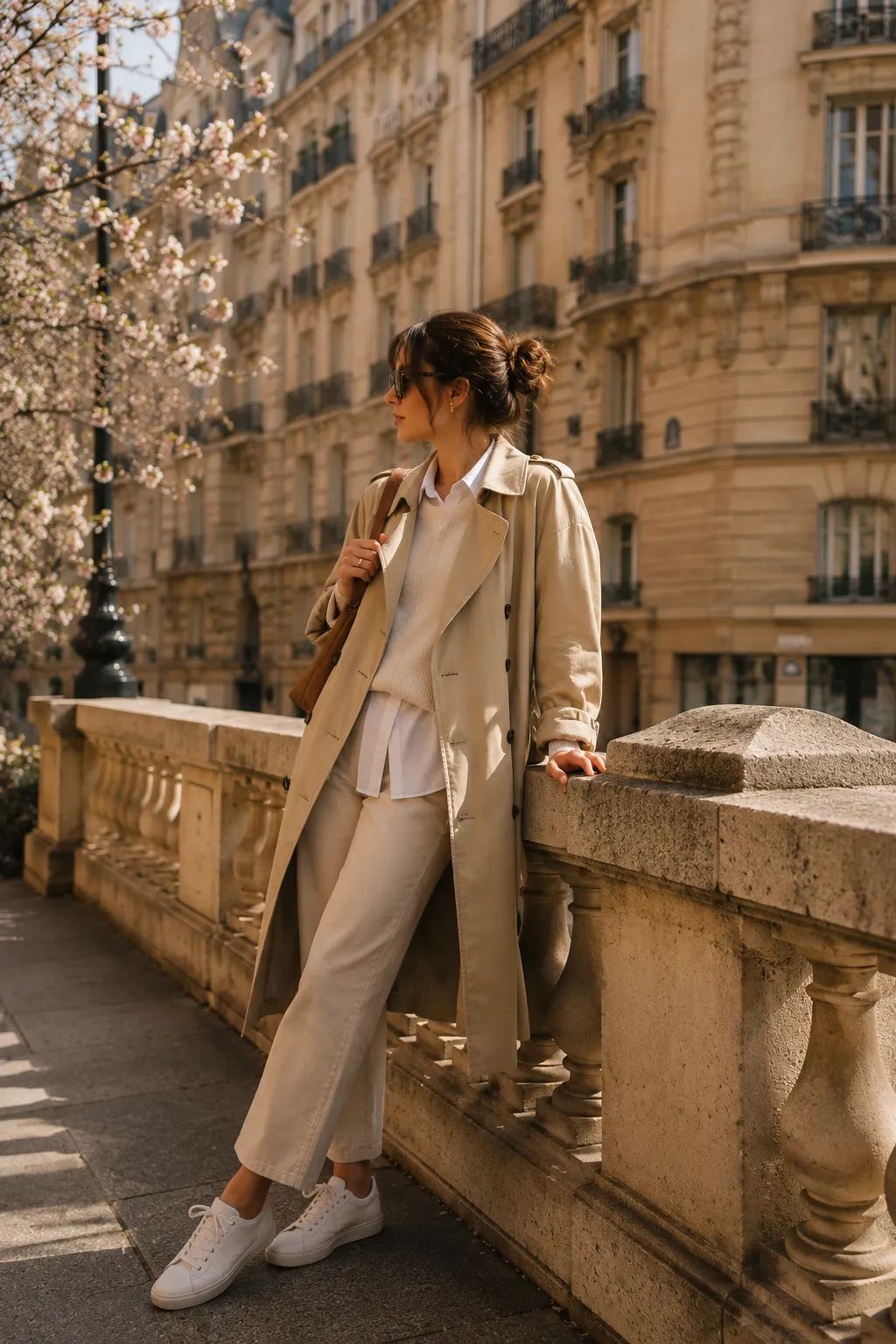 Two neutrals and one accent. Once the palette is locked, mixing is foolproof.
Shoes: the part everyone gets wrong
Paris is a walking city paved in cobblestones and uneven granite. This is where light packers either nail it or limp through their trip with blisters and a suitcase full of shoes they never wore.
Bring two pairs. Three at the absolute most.
- One pair you can walk 20,000 steps in — clean leather sneakers, loafers, or sleek flats. Not running shoes. White trainers are everywhere in Paris; chunky athletic sneakers mark you instantly as a tourist.
- One pair that dresses up — a low block heel or an elegant ankle boot. Block, not stiletto — stilettos and cobblestones are a sprained-ankle waiting to happen.
- (Optional) One sandal or ballet flat in summer.
Wear the bulkiest pair on the plane. That alone can save half your packing space.
The tourist tell isn’t a logo or a fanny pack anymore. It’s bright white box-fresh chunky sneakers with athletic socks. Swap to slim leather trainers and you’ve already half-blended in.
The bag you carry there — and the bag you carry around
Two different jobs, and conflating them is a classic mistake.
Your luggage: a soft-sided carry-on (roughly 55 × 40 × 20 cm to clear EU airline limits) plus one personal item. Soft-sided beats hard-shell here because it squishes onto crowded trains and into tiny hotel rooms.
Your day bag: small, crossbody, and zips closed. Paris has pickpockets in the tourist-dense spots — Métro, Eiffel Tower, Montmartre, Sacré-Cœur. A zip-top crossbody worn across the body, not a tote gaping open on your shoulder. Bonus: a compact crossbody also just looks more Parisian than a bulky backpack.
Toiletries without the liquids drama
If you’re going carry-on only, the 100ml liquid rule is what trips people up. Solve it once:
- Go solid wherever possible — shampoo bar, conditioner bar, solid perfume. No liquid limit, no leaks.
- Decant the rest into 100ml travel bottles. You need far less than you think for a week.
- Trust your hotel for the basics — most provide soap and often shampoo.
- Buy on arrival for anything bulky. A French pharmacie is a genuine highlight — their skincare is famous, cheap, and makes a better souvenir than a keychain.
One small zip pouch should hold the lot.
The packing method, step by step
Order matters. This is how it all fits:
- Lay out everything you think you need. Then remove a third. You will not miss it. This step is the whole game.
- Roll soft items (tees, knits, jeans) — rolling saves space and resists creases.
- Fold structured items (blazer, shirts) over the rolled layer so they crease less.
- Use one packing cube for tops, one for bottoms. Cubes aren’t about more space — they’re about finding things in a hotel room without unpacking the whole bag.
- Shoes go in last, soles-out along the edges, stuffed with socks and chargers to use the dead space inside them.
- Wear your bulkiest layer and shoes on the plane — coat, boots, the heaviest knit.
- Keep a “transit kit” in your personal item: passport, a change of top, a charger, meds, and the solid toiletries (in case a bag goes astray).
Pack for the season, not the forecast
Paris weather is moody and changes within a single day, so layering is how you cover the range without packing the range.
- Spring (Mar–May): Trench is essential. Mornings are cold, afternoons mild. A knit you can take off is your best friend.
- Summer (Jun–Aug): Warm, occasionally hot, rarely brutal. Breathable cottons and linen, the slip dress, sandals — but pack one light layer for evenings and air-conditioned interiors.
- Autumn (Sep–Nov): Arguably the best-dressed season. Trench or wool coat, knits, boots, scarves. Tonal heaven.
- Winter (Dec–Feb): Cold and grey, not arctic. A proper wool coat (worn on the plane), thermal base layers, and a scarf that doubles as a blanket on the train. Black is your whole life here, and that’s very Paris.
The trick across all four: one good coat worn on the plane does the heavy lifting so it never costs you suitcase space.
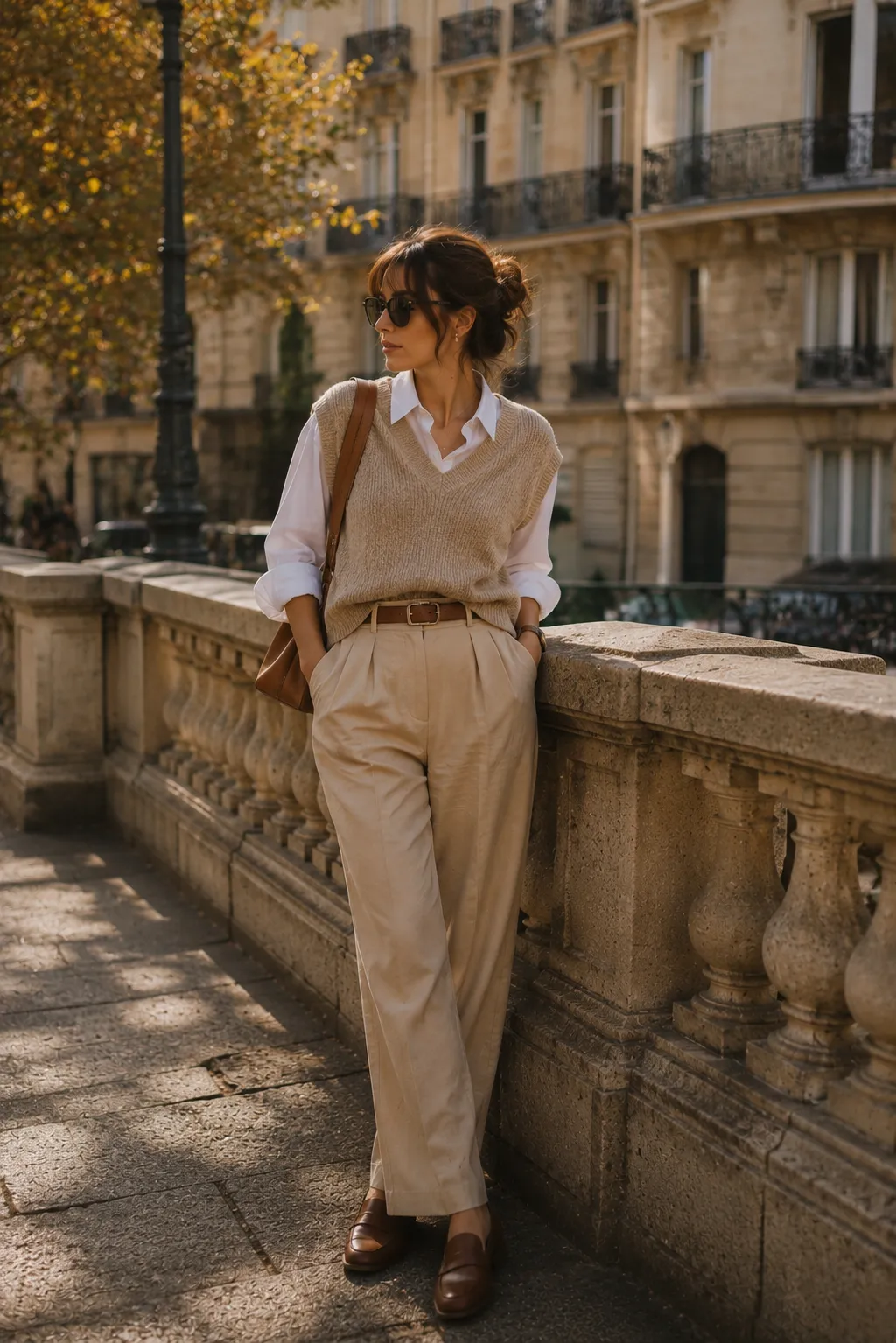 Layering is what lets one small bag cover a 12-degree swing in a single day.
How to actually look Parisian (not just “neat”)
Packing light is solved. Looking right is the part guidebooks skip. A few quiet rules:
- Tailoring over trend. One blazer that fits beautifully beats five trendy tops. Fit is the entire Parisian aesthetic.
- Undone, not underdone. A pushed-up sleeve, an untucked-then-half-tucked shirt, hair that isn’t fussed over. Effortless is deliberately a little imperfect.
- One detail, not ten. A red lip or a gold hoop or a silk scarf — pick one finishing touch, not all of them.
- Cover up at churches. Notre-Dame and other sacred sites expect shoulders and knees covered. Your trench or a scarf solves it.
- Restaurants lean dressy. A nicer dinner spot is a dress-or-blazer occasion, not a sneakers one. Your one heel and one dress exist for exactly this.
Mistakes that wreck a light Paris packing list
- Packing for “what if.” What-if pieces are the heaviest things in any bag. Buy on arrival if the rare scenario actually happens.
- Bringing more than two non-walking shoes. They’re heavy, bulky, and you’ll wear one pair the entire trip.
- A loud print that only goes with one thing. It breaks the whole mix-and-match system.
- Brand-new shoes. Break them in at home. Paris is not the place to discover where a shoe rubs.
- Skipping the coat to “save space.” It backfires — you wear the coat, you don’t pack it. It costs nothing in the bag.
- Overpacking toiletries. A week needs a fraction of what you’d bring “to be safe.”
A sample 7-day mix (one carry-on)
Proof that ten pieces stretch:
- Day 1 — arrival/walking: jeans + white shirt + sneakers + trench
- Day 2 — museums: trousers + striped tee + blazer + sneakers
- Day 3 — café & shopping: jeans + knit + flats + crossbody
- Day 4 — day trip (Versailles): trousers + tee + knit + trench + sneakers
- Day 5 — dinner out: the dress + blazer + heel
- Day 6 — relaxed exploring: jeans + tee + knit + sneakers
- Day 7 — last day/travel home: trousers + white shirt + blazer + comfortable shoes
Same ten pieces. Seven distinct looks. One small bag.
Key takeaways
- Pack a palette, not outfits — two neutrals + one accent so everything combines.
- Ten clothing pieces cover a week when each one pairs with three others.
- Two pairs of shoes, one for walking and one for dinner; wear the bulkiest on the plane.
- Zip-top crossbody for the day, soft carry-on for the journey.
- Solid toiletries dodge the liquid rule; buy extras at a French pharmacie.
- One good coat, worn not packed, handles Paris’s mood swings for free.
Pack this way once and you’ll never check a bag for a city trip again.
Frequently asked questions
How many days can a carry-on really cover in Paris?
Comfortably 7–10 days. The capsule is built for a week, but because every piece mixes, adding days mostly means a little laundry rather than packing more. Most hotels offer laundry and self-service laveries are everywhere.
Can I avoid checking a bag with just carry-on?
Yes. Keep to EU carry-on dimensions (around 55 × 40 × 20 cm), wear your coat and bulkiest shoes on the plane, and switch to solid toiletries to dodge the liquid rule. You'll clear the limit with room to spare.
What shoes are best for Paris cobblestones?
Clean leather sneakers, loafers, or sturdy flats for day, plus one low block heel or ankle boot for evening. Avoid stilettos, which catch in the stones, and bulky athletic trainers, the classic tourist giveaway. Always break shoes in before you go.
How do I not look like a tourist in Paris?
Dress tonal, well-fitted, and understated. Skip box-fresh chunky white sneakers, loud logos, and a gaping open tote. Add one finishing detail such as a scarf, a red lip, or a gold hoop, and carry a zip-top crossbody instead of a backpack.
What about doing laundry on a longer trip?
Plan for it rather than packing around it. A small bottle of travel detergent rinses a few pieces in a sink overnight; for bigger loads a neighbourhood laverie costs a few euros and takes about an hour. That is exactly what lets ten pieces stretch past a week.