Why Gen Z Is Redefining Fashion Trends in 2026
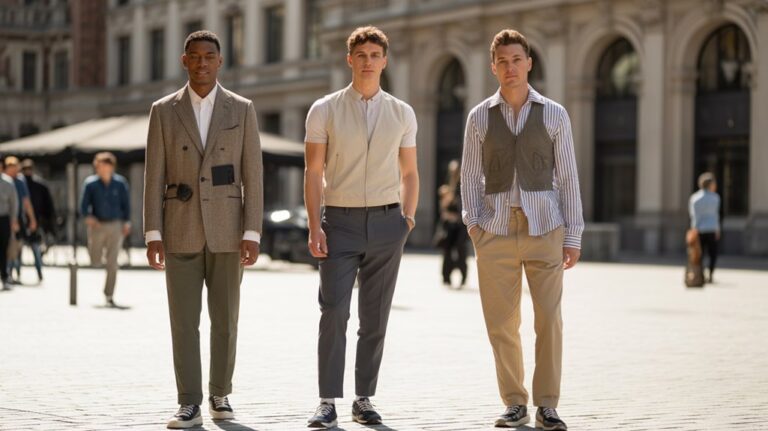
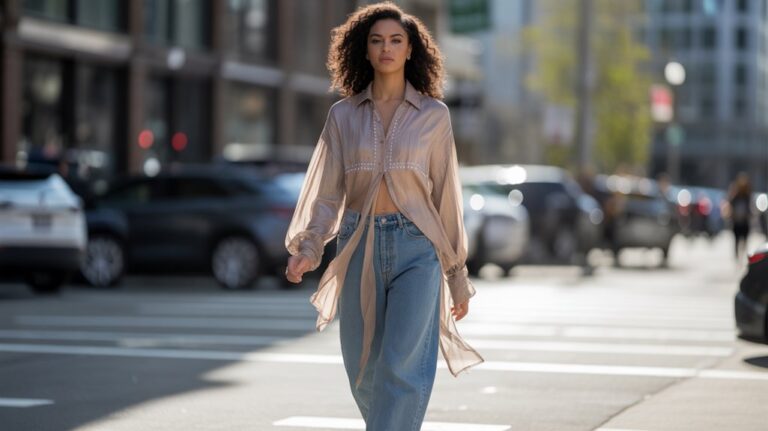
Gen Z is changing fashion in 2026 by rejecting the idea that trends should be followed blindly. Instead of dressing to fit in, they dress to express who they are. Comfort, individuality, and authenticity matter more than labels or luxury.
This generation mixes styles freely—thrifted pieces with new ones, casual with bold, digital with physical. They care about where clothes come from, how they’re made, and whether they align with their values. Social media influences them, but it doesn’t control them.
In 2026, Gen Z isn’t waiting for fashion rules to be set. They’re rewriting them—on their own terms.
Why Gen Z’s $400B Spending Power Matters to Fashion
While older generations might dismiss them as simply young shoppers, Gen Z wields an impressive $400 billion in global spending power that’s completely reshaping the fashion industry.
I’m watching these consumers transform traditional brand strategies, forcing luxury houses to embrace sustainability and innovation like never before.
Their pricing power extends beyond basic purchases, as they’re projected to control 40% of all fashion spending within the decade. What excites me most is how they’re compelling brands to rethink everything, from manufacturing processes to marketing approaches, creating a more dynamic, responsive marketplace that values authenticity and environmental responsibility alongside style.
Despite 75% calling sustainability extremely important, roughly 70% of wardrobes still consist of fast fashion, revealing a complex gap between values and actual purchasing behavior. This gap widens as 79% of Gen Z wait for products to go on sale rather than paying full price regularly.
How Gen Z Fashion Embraces Maximalism Over Minimalism
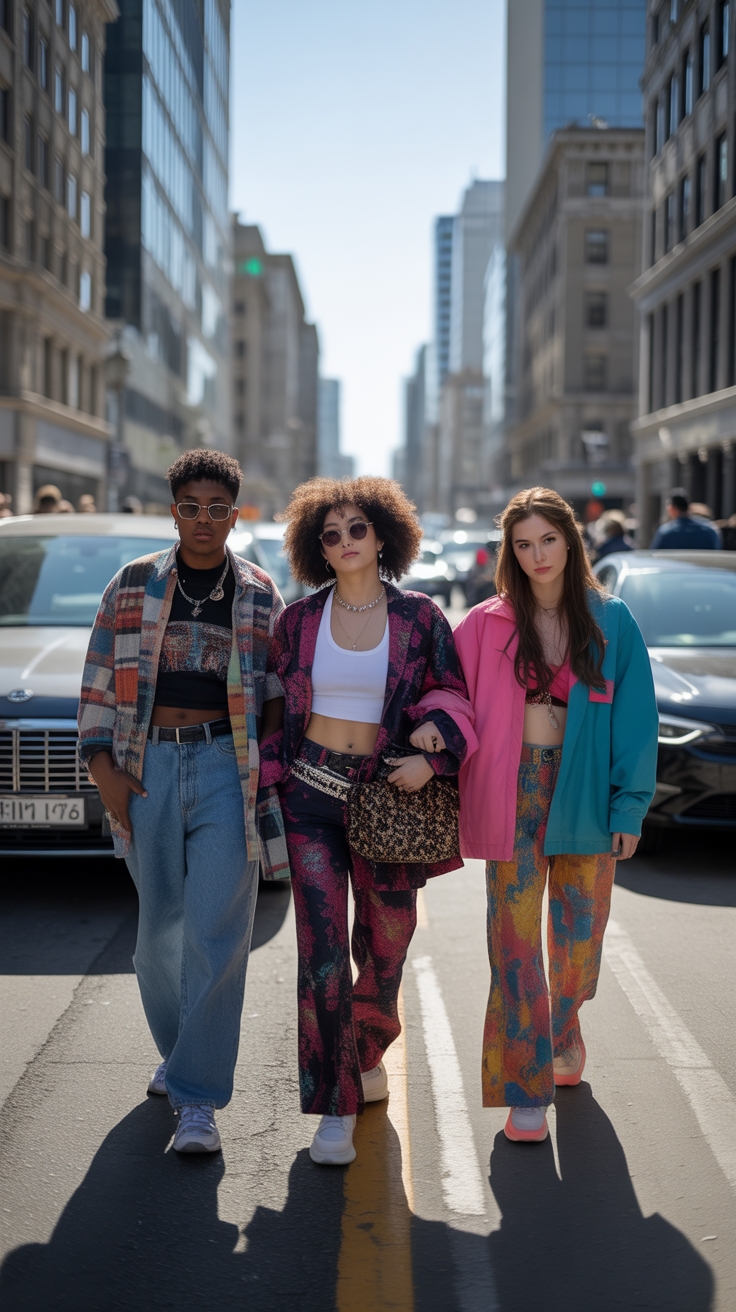
As quiet luxury fades into the background, Gen Z is painting the fashion world in bold, unapologetic strokes that celebrate excess and personal expression.
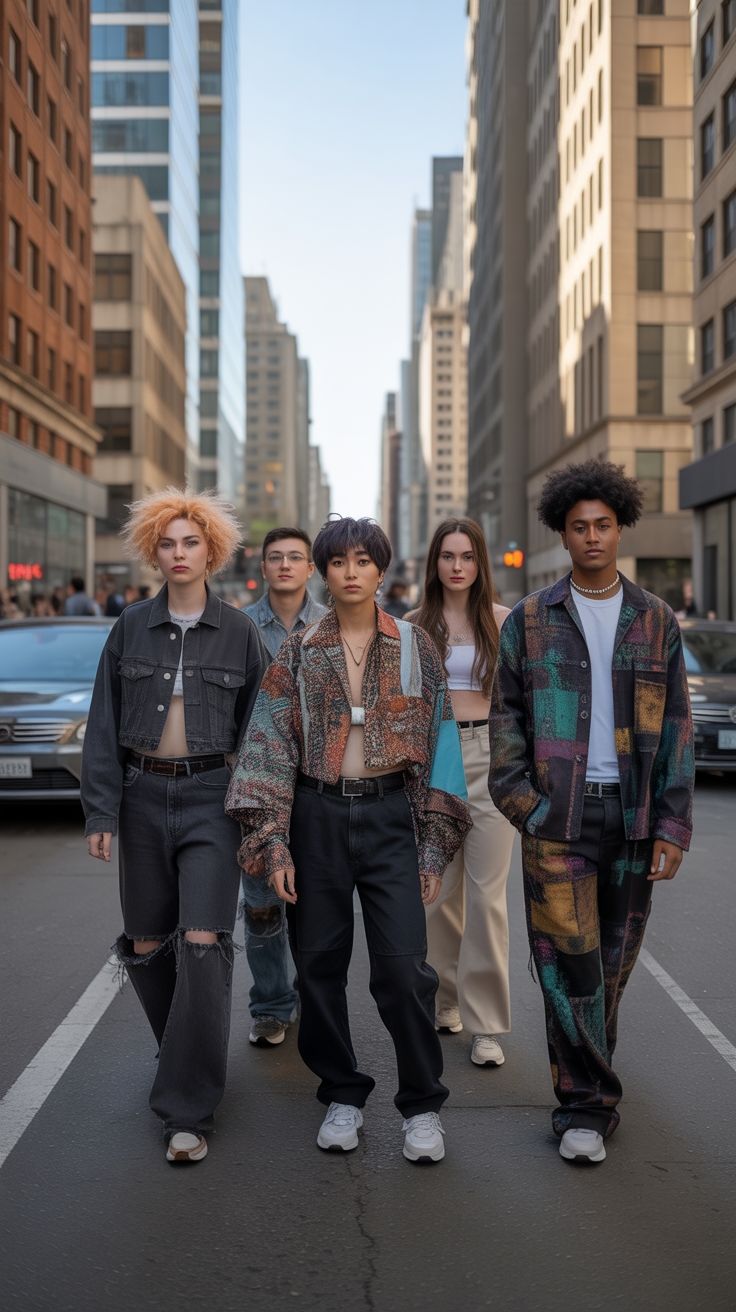
I’m watching them layer sequined skirts under varsity jackets, stack chunky jewelry over vintage tees, and clash vibrant chocolate browns with tomato reds.
Texture Overload defines their aesthetic—faux fur meets metallics meets layered knits in one outfit.
Pattern Clashing breaks every matching rule, mixing prints with playful abandon.
They’re pairing £2 thrifted finds with £700 designer pieces, creating stories through irony and authenticity.
This isn’t just fashion; it’s visual rebellion that demands your attention and celebrates individuality.
The moodboard draws from Cyber Y2K aesthetics, clowncore energy, and online-culture nostalgia that feels both ironic and deeply intentional.
Why Gen Z Customizes Wardrobes With DIY and Vintage Finds
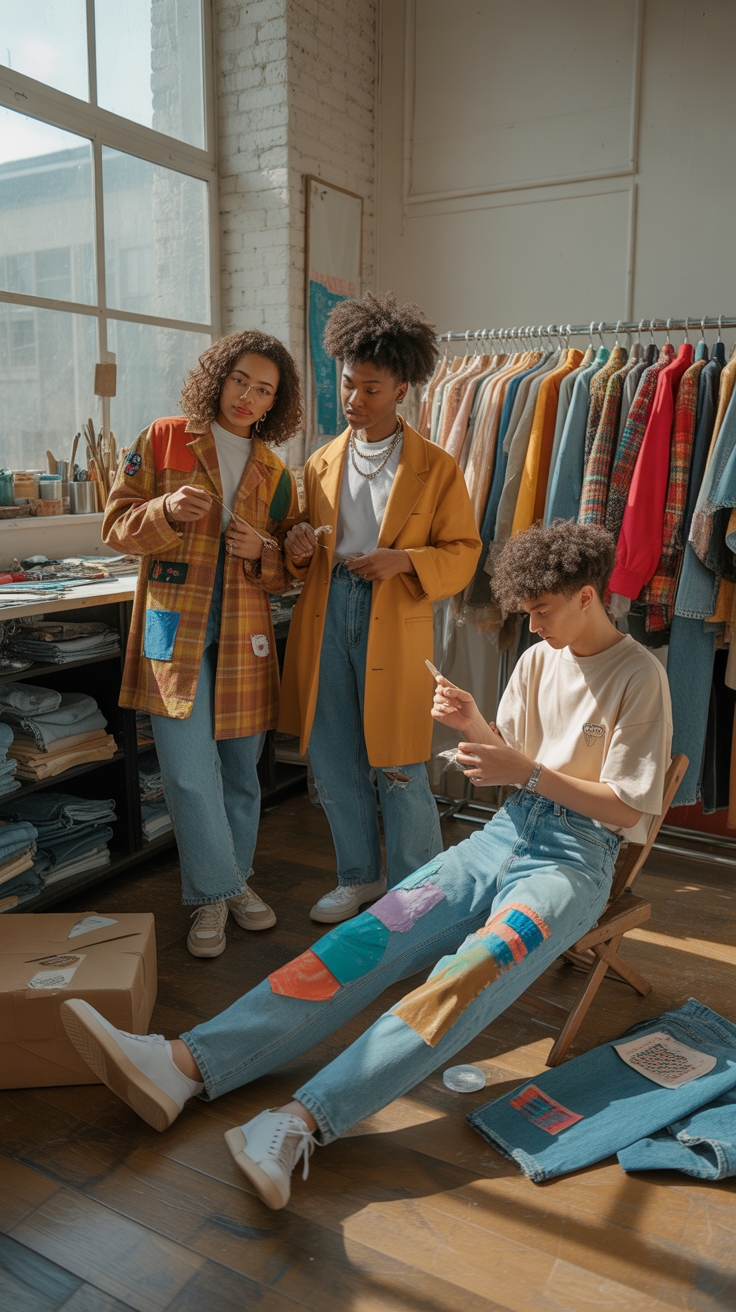
Hunting through vintage racks and transforming thrift finds with your own two hands isn’t just a hobby for Gen Z—it’s how they’re reclaiming fashion from the algorithm. I’m watching teens hand-paint denim jackets, turn grandma’s curtains into streetwear, and stack mismatched earrings they customized themselves.
This is Identity Crafting at its finest, where platforms like Depop and Vinted fuel the search for pieces nobody else owns. The magic happens through Skill Transmission, learning techniques from online tutorials and each other.
They’re building wardrobes that tell stories, mixing thrifted blazers with 3D-printed accessories, choosing authenticity over mass-produced sameness.
How Sustainability Drives Gen Z to Thrift and Resale
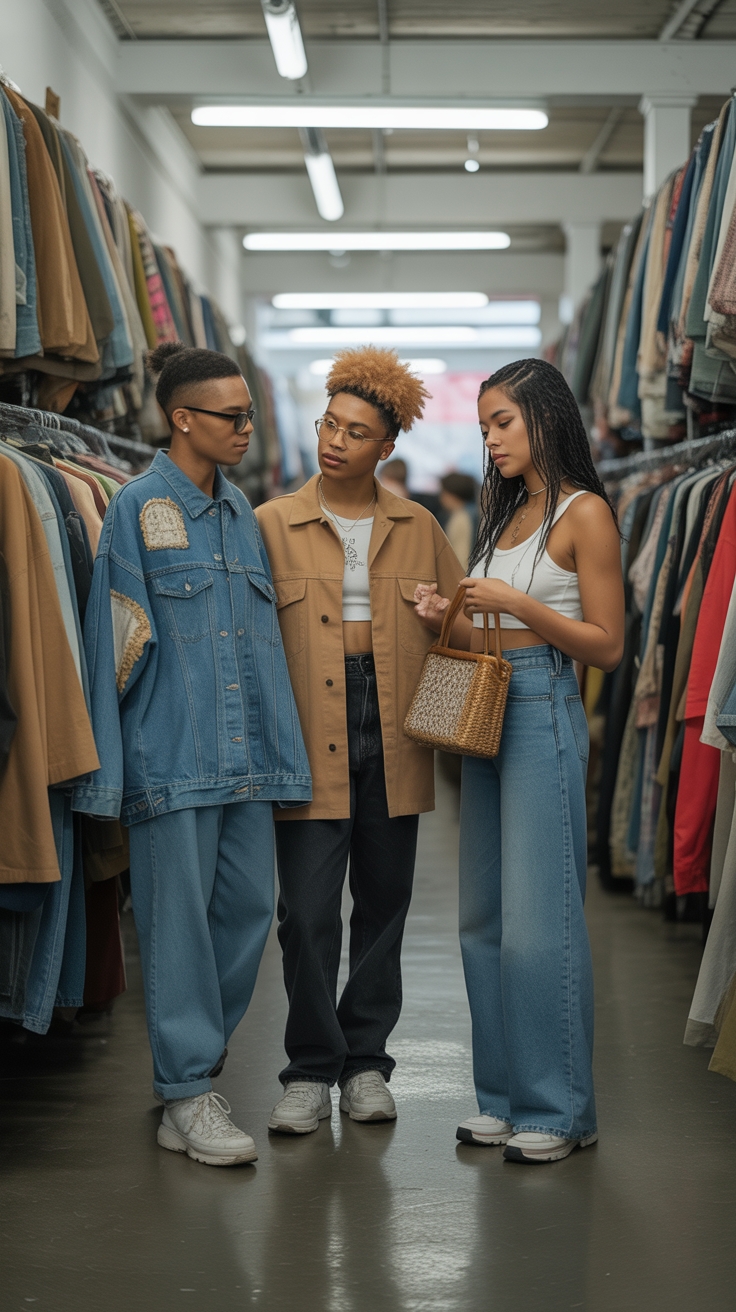
Because fast fashion dumps 92 million tons of textile waste into landfills each year, Gen Z’s grabbing their reusable totes and heading straight to thrift stores instead.
I’ve watched 66% of thrift shoppers embrace secondhand as genuinely eco-friendly, creating real circular consumption that keeps clothes spinning through multiple wardrobes.
Here’s what’s driving this sustainable shift:
- 72% shifted spending from harmful retailers to thrift stores
- 80% see zero stigma in buying used clothing
- 30% repaired garments to extend their life
- 58% consider resale value before purchasing
This eco transparency isn’t just trendy—it’s revolutionary, blending environmental responsibility with personal style perfectly.
Y2K Revival: How Gen Z Updates Early 2000s Style
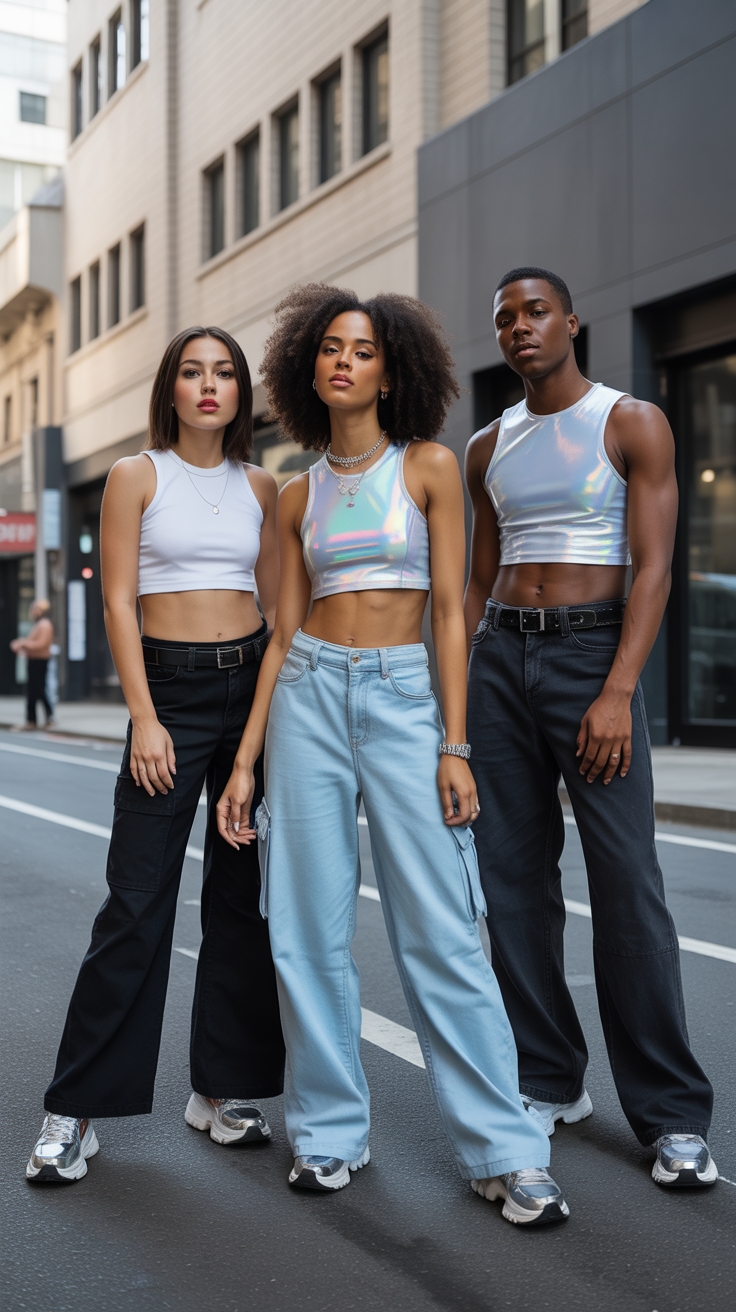
While minimalism ruled fashion for years, Gen Z’s flipping the script with a technicolor blast from the past that’s impossible to ignore.
I’m watching velour tracksuits and butterfly clips dominate your feeds, with 74% of Y2K buyers coming from your generation.
You’re not just copying 2000s trends, though. You’re reinventing them with sustainable fabrics, oversized layering over low-rise jeans, and eco-conscious updates.
TikTok drives 41% of your fashion choices, turning rhinestone details and cargo pants into must-haves. This 20-year nostalgia cycle proves you’re creating something fresh, bold, and uniquely yours.
How Virtual Wearables and AR Try-Ons Extend Gen Z Identity
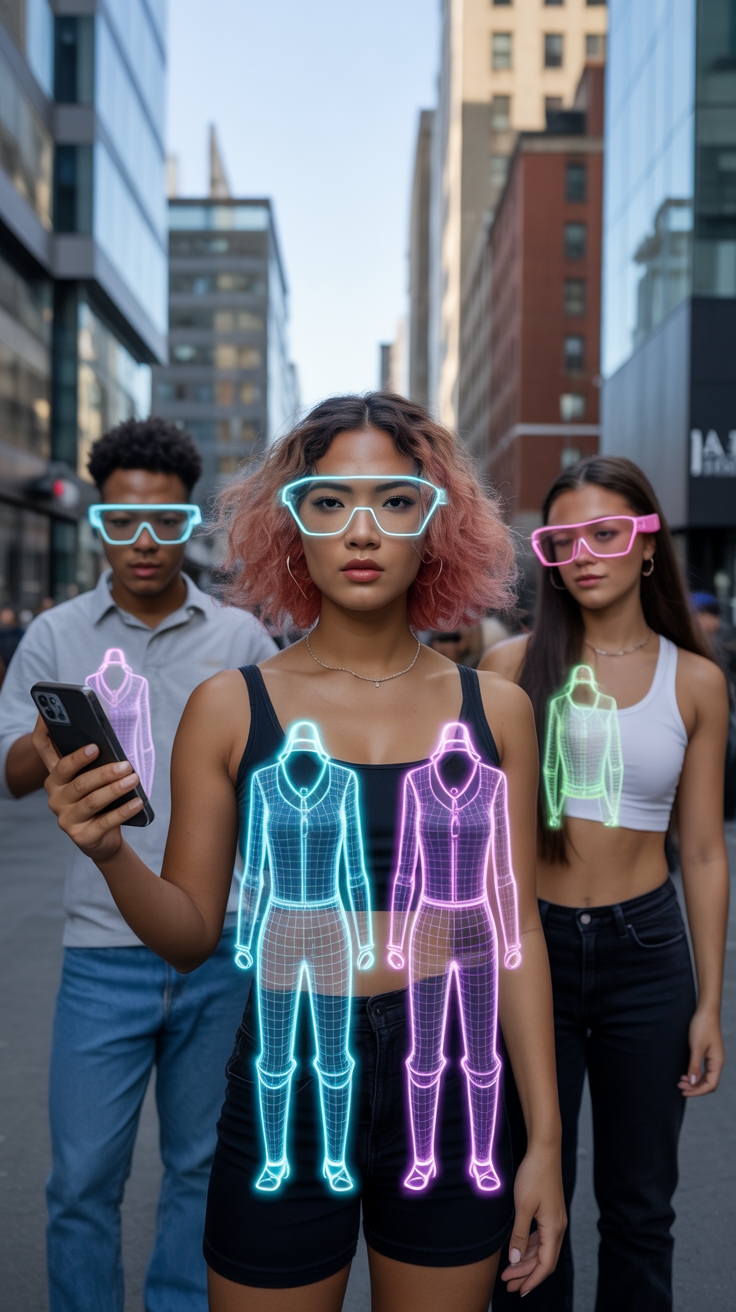
Gen Z’s fashion revolution extends beyond physical closets into digital spaces where identity gets crafted pixel by pixel.
I’m watching wearables transform from fitness trackers into identity layering tools that blend physical and virtual self-expression.
With 20.5 million Gen Z smart wearable users in 2024, these devices aren’t just monitoring heart rates—they’re becoming avatar customization platforms.
Here’s how wearables extend identity:
- Smart rings and glasses embed style into daily routines
- AR try-ons let you test looks before purchasing
- Personalized health data creates unique wellness narratives
- Device customization options express individual preferences
This fusion creates exciting possibilities for expressing who you are, everywhere.
Why Gen Z Fashion Is Rejecting Gender Labels
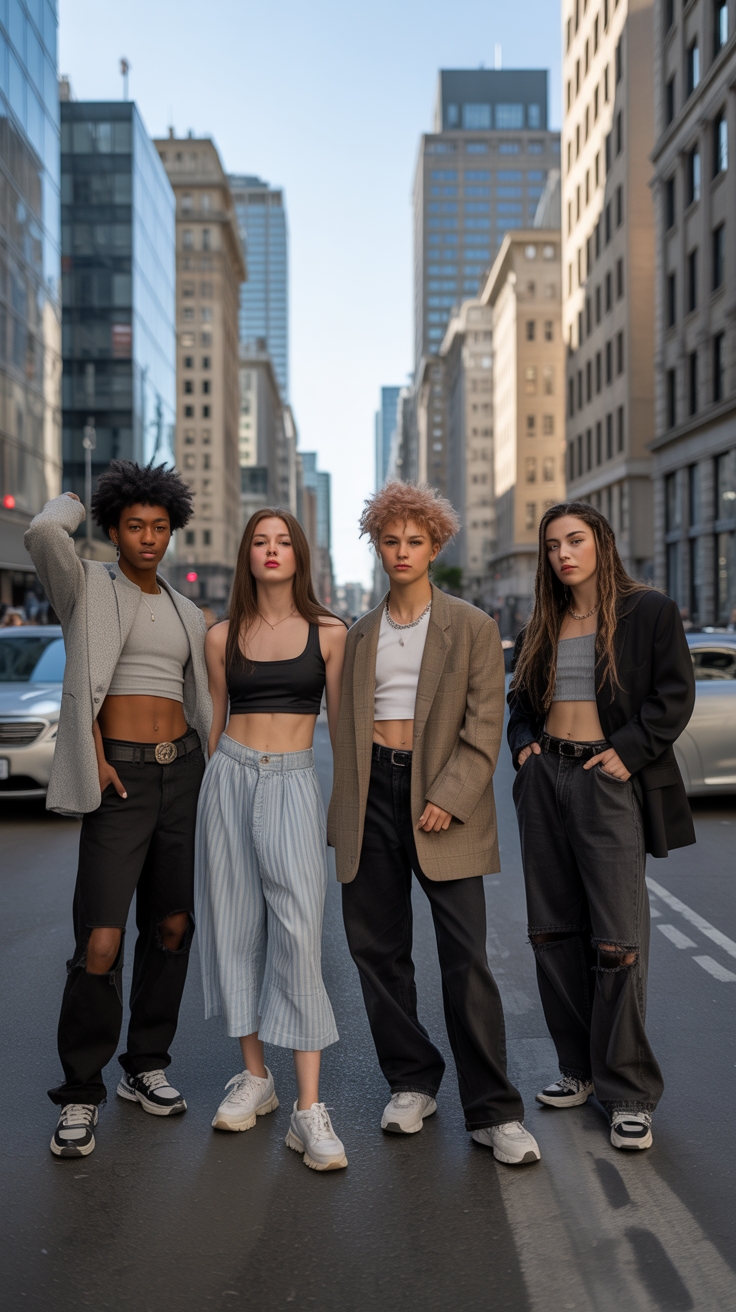
Why are closets suddenly bursting with clothes that refuse to pick a side? I’ve watched Gen Z turn fashion into a rebellion against binary labels, where pronoun visibility matters more than outdated rules.
You’ll see corsets paired with cargo pants, skirts worn by everyone, and platform Crocs completing formal outfits. This closet neutrality isn’t confusion—it’s freedom.
Sixty-nine percent of Gen Z women actively reject patriarchal norms through their wardrobe choices, mixing vivid colors and clashing patterns that celebrate mood over gender expectations.
Fashion becomes your visual diary, signaling values while prioritizing autonomy. The result? Everyday dressing that’s invigoratingly unrestricted and authentically you.